
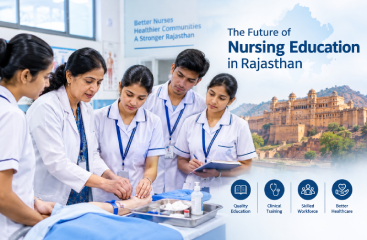
The Future of Nursing Education in Rajasthan: Opportunities, Innovation, and Excellence
Introduction
Nursing education plays a vital role in strengthening the healthcare system by preparing skilled, knowledgeable, and compassionate professionals. As healthcare needs continue to evolve, nursing institutions must adapt their educational approaches to prepare graduates for modern clinical practice, community healthcare, healthcare administration, and emerging technologies.
In Rajasthan, nursing education has an important role in supporting healthcare delivery across metropolitan cities, smaller towns, rural communities, and underserved regions. The future of nursing education will depend on the quality of educational institutions, the availability of qualified faculty, access to clinical training, modern learning resources, and opportunities for continuous professional development.
The goal should not simply be to increase the number of nursing graduates. It should be to ensure that every graduate develops the competence, confidence, ethical values, and practical skills required to deliver safe and patient-centred care.
1. Expanding Access to Quality Nursing Education
Expanding access to nursing education can create opportunities for students across Rajasthan to pursue careers in healthcare. Nursing colleges and training institutions can contribute to this goal by offering appropriate educational programmes and developing strong academic and clinical facilities.
The Rajasthan Government’s 2025–26 Output-Outcome Budget included a target to establish 29 nursing colleges and add 1,740 B.Sc. Nursing seats. Such plans highlight the importance of expanding nursing education capacity alongside healthcare development.
However, expansion must be accompanied by quality assurance. Every institution needs suitable infrastructure, qualified faculty, adequate learning resources, and appropriate clinical training arrangements.
The long-term success of nursing education depends on the quality of graduates, not only the number of seats available. Institutions should therefore prioritise academic standards, practical competence, student support, and compliance with applicable regulatory requirements.
2. Strengthening Clinical Training and Practical Learning
Clinical training is one of the most important components of nursing education. Students must learn how to apply theoretical knowledge in real healthcare environments while developing clinical judgement, communication skills, and professional responsibility.
Nursing institutions in Rajasthan can strengthen practical learning through effective partnerships with hospitals, community health centres, primary healthcare facilities, and other appropriate clinical settings.
Modern skills laboratories and simulation-based education can provide students with opportunities to practise procedures, assess simulated patients, and respond to clinical scenarios under supervision.
Clinical training should also expose students to a variety of healthcare settings, including medical-surgical nursing, maternal and child health, community health, emergency care, and other relevant areas.
A strong connection between classroom teaching and supervised clinical practice helps graduates become better prepared for the responsibilities of professional nursing.
3. Developing Qualified Nursing Faculty
Faculty members shape the knowledge, skills, and professional attitudes of nursing students. Their teaching abilities, clinical expertise, mentorship, and commitment to academic excellence are essential for the development of future nurses.
The growth of nursing education in Rajasthan must therefore be supported by continuous faculty development and the availability of appropriately qualified educators.
Institutions should encourage faculty members to participate in academic workshops, clinical updates, research activities, teaching-methodology programmes, and professional development initiatives.
Training in digital education, simulation-based teaching, assessment methods, and evidence-based practice can further improve the quality of nursing instruction.
Creating a supportive academic environment, recognising faculty contributions, and encouraging research and collaboration can help institutions retain skilled educators and strengthen educational outcomes.
4. Integrating Technology into Nursing Education
Technology is creating new opportunities to make nursing education more interactive, accessible, and responsive to changing healthcare requirements.
Digital learning platforms, electronic educational resources, online seminars, simulation laboratories, and virtual learning tools can supplement traditional teaching methods.
Students can use digital resources to revise complex concepts, explore clinical scenarios, and improve their understanding of healthcare procedures. Faculty members can use technology to support assessments, monitor learning progress, and provide additional educational resources.
Artificial intelligence may also assist with selected learning activities, such as practice questions and concept revision. However, information generated by AI must be verified, and these tools should not replace qualified teaching, practical experience, or professional judgement.
For Rajasthan, digital education can be particularly valuable when implemented in ways that account for differences in connectivity, infrastructure, language needs, and access to devices.
5. Improving Nursing Infrastructure and Learning Resources
The quality of nursing education depends partly on the facilities available to students and educators.
Institutions should provide suitable classrooms, libraries, laboratories, clinical demonstration equipment, digital learning resources, and appropriate student facilities.
Well-equipped nursing skills laboratories can support practical learning, while updated libraries and online academic resources help students develop research and independent learning skills.
Infrastructure development should be guided by educational requirements and applicable regulatory standards. Institutions should also maintain equipment, review learning resources regularly, and ensure that students have sufficient opportunities to use the facilities provided.
Investing in infrastructure is most effective when accompanied by qualified faculty, well-planned teaching, and meaningful clinical learning experiences.
6. Strengthening Rural and Community Health Nursing
Rajasthan’s geographical diversity creates different healthcare needs across urban, rural, remote, and underserved communities. Nursing education should prepare students to understand and respond to these varied circumstances.
Community-based learning can help nursing students understand maternal and child health, nutrition, communicable and non-communicable diseases, health education, preventive care, and the challenges faced by people accessing healthcare services.
Supervised exposure to community health settings can also develop communication skills, cultural sensitivity, and an understanding of the social factors that influence health.
Institutions should encourage students to recognise the importance of accessible healthcare, early intervention, health promotion, and respectful patient communication.
Preparing nurses for community healthcare can contribute to a stronger healthcare workforce and better coordination between communities and formal health services.
7. Promoting Research and Evidence-Based Practice
The future of nursing education requires a stronger culture of research, inquiry, and evidence-based practice.
Nursing students and faculty should be encouraged to explore healthcare challenges, evaluate reliable research, and understand how evidence can improve patient care.
Research topics may include community health, infection prevention, nursing education, patient safety, maternal and child health, healthcare technology, and nursing workforce development.
Institutions can support research through faculty mentorship, academic conferences, research presentations, journal discussions, and collaboration with universities and healthcare organisations.
Students should learn how to evaluate the quality of research, understand research ethics, and apply relevant findings within their professional scope.
A strong research culture can help nursing institutions contribute to the development of clinical practice, educational quality, and healthcare policy.
8. Creating Opportunities for Specialisation and Career Growth
Nursing education should prepare students for a range of professional pathways rather than focusing exclusively on entry-level clinical roles.
Depending on their qualifications, interests, and applicable requirements, nursing professionals may pursue further education and development in areas such as critical care, emergency nursing, paediatric nursing, community health, mental health, nursing education, research, and healthcare administration.
Institutions can support career development by providing academic counselling, information about recognised programmes, mentoring, and guidance on further qualifications.
Advanced education can also prepare experienced nurses for teaching, leadership, management, and specialised clinical responsibilities.
Clear information about eligibility requirements and recognised qualifications is essential so that students and professionals can make informed decisions about their future.
9. Improving Quality Assurance and Institutional Standards
Quality assurance is essential for ensuring that nursing institutions deliver consistent, effective education.
Institutions should regularly review their teaching methods, faculty availability, clinical training arrangements, infrastructure, student performance, and learning outcomes.
They should also comply with the applicable requirements of the Indian Nursing Council, Rajasthan Nursing Council, relevant universities, and other competent authorities.
The Rajasthan Nursing Council publishes information about recognised nursing institutions and different nursing programmes. Students and institutions should consult current official information when checking recognition and programme requirements.
Quality assurance should be more than an administrative exercise. It should help institutions identify weaknesses, introduce corrective measures, and improve the actual learning experience of students.
Continuous evaluation, student feedback, and a commitment to improvement can strengthen institutional credibility and educational outcomes.
10. Strengthening Industry and Healthcare Partnerships
Collaboration between nursing colleges, hospitals, healthcare organisations, universities, and professional bodies can improve the relevance of nursing education.
Healthcare partnerships can support clinical placements, guest lectures, workshops, faculty development, research collaboration, and exposure to modern clinical practices.
Regular interaction with healthcare professionals can also help educators understand the competencies expected from nursing graduates.
Institutions should use this feedback to strengthen curricula, improve clinical teaching, and prepare students for workplace responsibilities.
Strong academic-clinical partnerships create a closer connection between what students learn and what they will be expected to do in professional practice.
11. Preparing Nurses for Digital Healthcare and Modern Clinical Practice
Healthcare delivery is increasingly influenced by digital records, telehealth, data systems, and technology-supported clinical workflows.
Future nursing graduates should understand the appropriate use of electronic health records, digital documentation, patient confidentiality, and healthcare information systems.
They should also develop communication, teamwork, critical thinking, and problem-solving skills that remain essential regardless of technological change.
Nursing institutions can introduce relevant digital learning activities while ensuring that students understand the limitations of technology and the importance of professional accountability.
The future-ready nurse will need to combine clinical knowledge with digital competence, ethical decision-making, adaptability, and compassionate care.
12. Challenges Facing Nursing Education in Rajasthan
Although there are opportunities for growth, nursing education may face several challenges that require sustained attention.
Infrastructure gaps: Some institutions may need further investment in laboratories, libraries, equipment, and digital facilities.
Faculty development: Recruiting and retaining qualified educators and providing continuous professional development remain important priorities.
Clinical learning opportunities: Students need appropriate access to supervised clinical experience and adequate opportunities to practise essential skills.
Differences in access: Students in different regions may have unequal access to educational resources, reliable connectivity, and specialised training opportunities.
Quality assurance: Institutions must maintain applicable academic, clinical, and regulatory standards as educational capacity grows.
Career guidance: Students need reliable information about recognised qualifications, professional registration, further study, and career pathways.
Addressing these challenges requires coordinated action from educational institutions, healthcare organisations, regulators, faculty members, and policymakers.
13. The Way Forward: A Vision for Nursing Education in Rajasthan
A sustainable vision for nursing education in Rajasthan should combine expanded access with stronger educational quality, practical competence, and professional development.
Key priorities include:
- Expanding educational capacity while maintaining appropriate standards.
- Investing in modern skills laboratories and clinical training.
- Strengthening faculty recruitment, training, and retention.
- Integrating digital learning and nursing informatics into appropriate programmes.
- Promoting research, evidence-based practice, and academic collaboration.
- Improving access to community-based and supervised clinical learning.
- Supporting student mentoring and career guidance.
- Strengthening quality assurance and regulatory compliance.
- Building partnerships between nursing institutions and healthcare providers.
- Regularly evaluating educational outcomes and implementing improvements.
These priorities can help nursing institutions prepare graduates who are capable of responding to evolving healthcare needs and contributing to improved patient outcomes.
Conclusion
The future of nursing education in Rajasthan depends on a shared commitment to quality, innovation, professional development, and accessible learning opportunities.
Expanding nursing education capacity can create valuable opportunities, but lasting progress requires qualified faculty, strong clinical training, appropriate infrastructure, effective institutional leadership, and continuous quality improvement.
Nursing institutions must prepare students not only to pass examinations but also to think critically, communicate effectively, act ethically, and provide compassionate care in diverse healthcare settings.
By combining academic excellence with practical learning, digital innovation, and community engagement, Rajasthan can strengthen its nursing education system and support the development of a competent and future-ready nursing workforce.
The future of healthcare in Rajasthan will be strengthened by nursing education that combines knowledge, practical competence, innovation, and compassion.